Saint Paul, MN · Garage Door Service
Serving St. Anthony's 1960s-70s housing stock, 8 miles from Saint Paul. We know the torsion hardware and panel sizes that came with homes built around 1971.
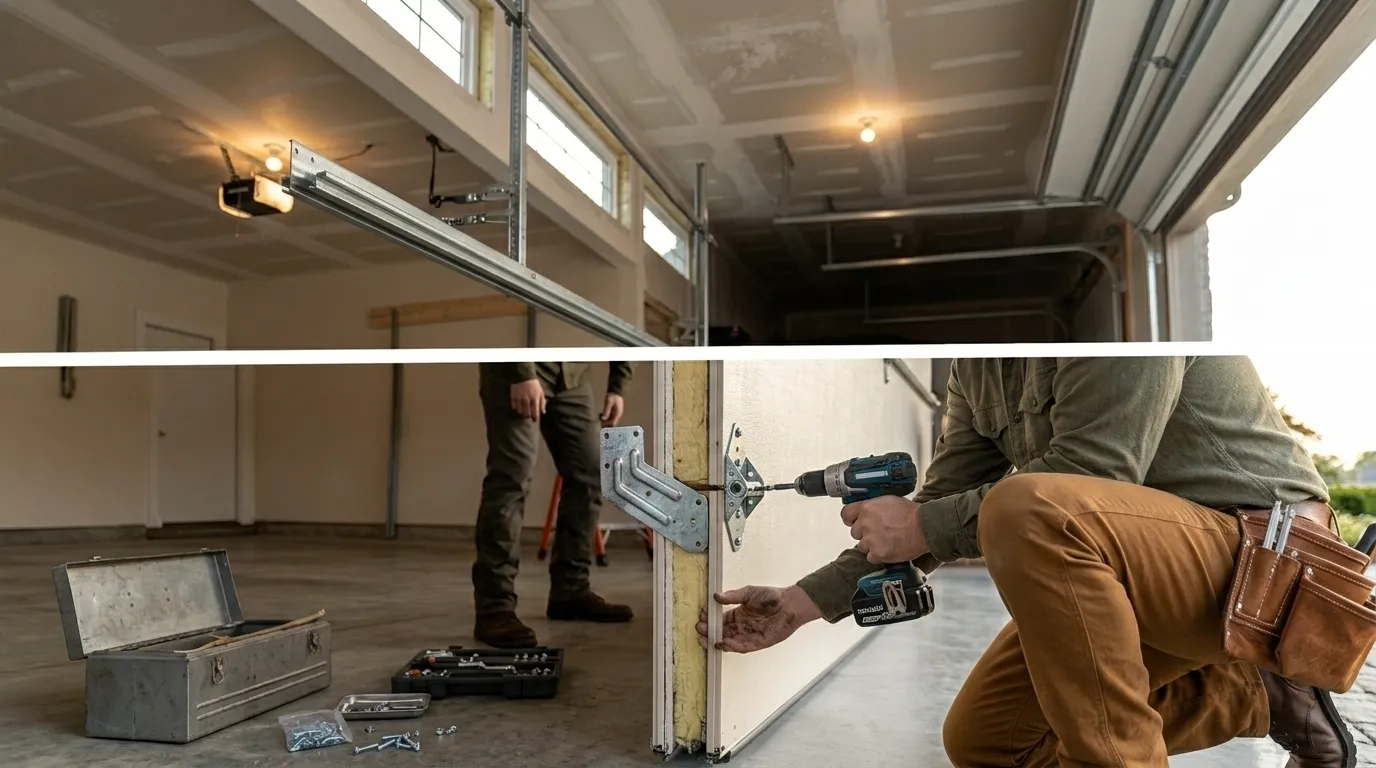
St. Anthony sits about 8 miles from our Saint Paul base, which puts it on the longer end of our regular run rather than a next-door stop. We don't keep a depot in St. Anthony and we're not going to pretend otherwise - every job here starts with a drive across town. That's worth knowing if you're comparing us to an outfit that's physically closer, because it can affect same-day scheduling on a busy morning. What it doesn't affect is the parts we bring or the work we do once we're in your driveway. We plan the St. Anthony stops on the schedule the way we plan any of the areas 8 to 14 miles out, and we bring the hardware that matches what actually gets installed in houses of this era, not a generic kit.
The median home in St. Anthony was built around 1971, which lines up with the broader mid-century wave across this part of the service area - most of the stock going up between 1956 and 2002, with the bulk concentrated in the 1960s and 70s. With roughly 4,109 households here and a median income near $97,784, St. Anthony reads as an established, steady neighborhood rather than a newer subdivision or a still-in-flux one. That 1971 median matters more than it sounds like it should: it tells you what kind of door opening, what kind of header clearance, and what kind of spring system was standard when these garages were framed. It's not the same build year as some of the areas we cover closer to downtown, and it's not the same as the newer construction on the far edges of the service area either. St. Anthony is its own pocket, built in a fairly tight window, and that window shapes almost everything about the repair calls we get from here.
A garage built around 1971 almost never has the tall, wide opening you see in homes built after 2000. Doors from this era tend to run narrower, often on single-panel or early sectional designs with torsion springs sized for a lighter door than what's sold today. When a spring breaks on one of these, the replacement isn't always a stock item - the drum size, the wind, and sometimes the shaft diameter don't match what a big-box store carries off the shelf. Openers in these garages are frequently second- or third-generation replacements, not original, since the first opener motors from the early 70s rarely survive fifty winters. Add in the COLD severe climate band this whole region sits in, and steel panels from that era show their age through rust at the bottom seam and hardened, cracked weatherstripping before anything mechanical fails. We'll tell you straight when a panel or spring on a house this age is worth fixing versus when the whole door's due - sometimes patching a 1971 door costs more over two years than replacing it once.
St. Anthony doesn't stand alone on the map - it's roughly 5 miles from Falcon Heights, and sits among a ring of areas that share a similar build era: Roseville and Mounds View aren't far off, and the older sections closer to Saint Paul itself, like Como Park about 3 miles northwest of downtown, run even earlier. What ties these together isn't a shared address, it's a shared decade of construction. A door call in St. Anthony and a door call in one of the neighboring 1960s-70s pockets often turn out to need the same torsion spring size or the same discontinued panel profile, even though the streets themselves have nothing in common. Knowing the surrounding towns' rough build windows helps us bring the right part on the first trip instead of guessing and coming back. It's less about geography and more about matching the truck's stock to the decade the neighborhood was built in.
No. We run out of Saint Paul, about 8 miles away, and St. Anthony is a regular stop on our route. We don't keep a depot here, so we're upfront that it's a drive-in job every time, not a walk-around-the-corner one.
Homes built around St. Anthony's 1971 median often used torsion springs sized for lighter, narrower doors than what's standard now. The drum size or wind isn't always a shelf item, so we measure the existing hardware rather than assume a modern universal spring will fit.
Sometimes, sometimes not. In this COLD severe climate, steel panels from the 60s and 70s often have rust starting at the bottom seam and brittle weatherstripping. If the frame's still square and the track is straight, a repair can hold. If it's the second repair in two years, replacement usually costs less over time.
We fold St. Anthony into the same routing as other stops 8 to 14 miles from Saint Paul. We don't promise a fixed response window here since we're not naming a time we haven't verified, but we do plan the day's route to hit this area efficiently rather than backtracking.
Call now or request a free quote - same-day service on most repairs, upfront written pricing.