Saint Paul, MN · Garage Door Service
Saint Paul homes built between 1956 and 2002 often carry doors and track sized for a different era. We install doors built for this climate and these openings.
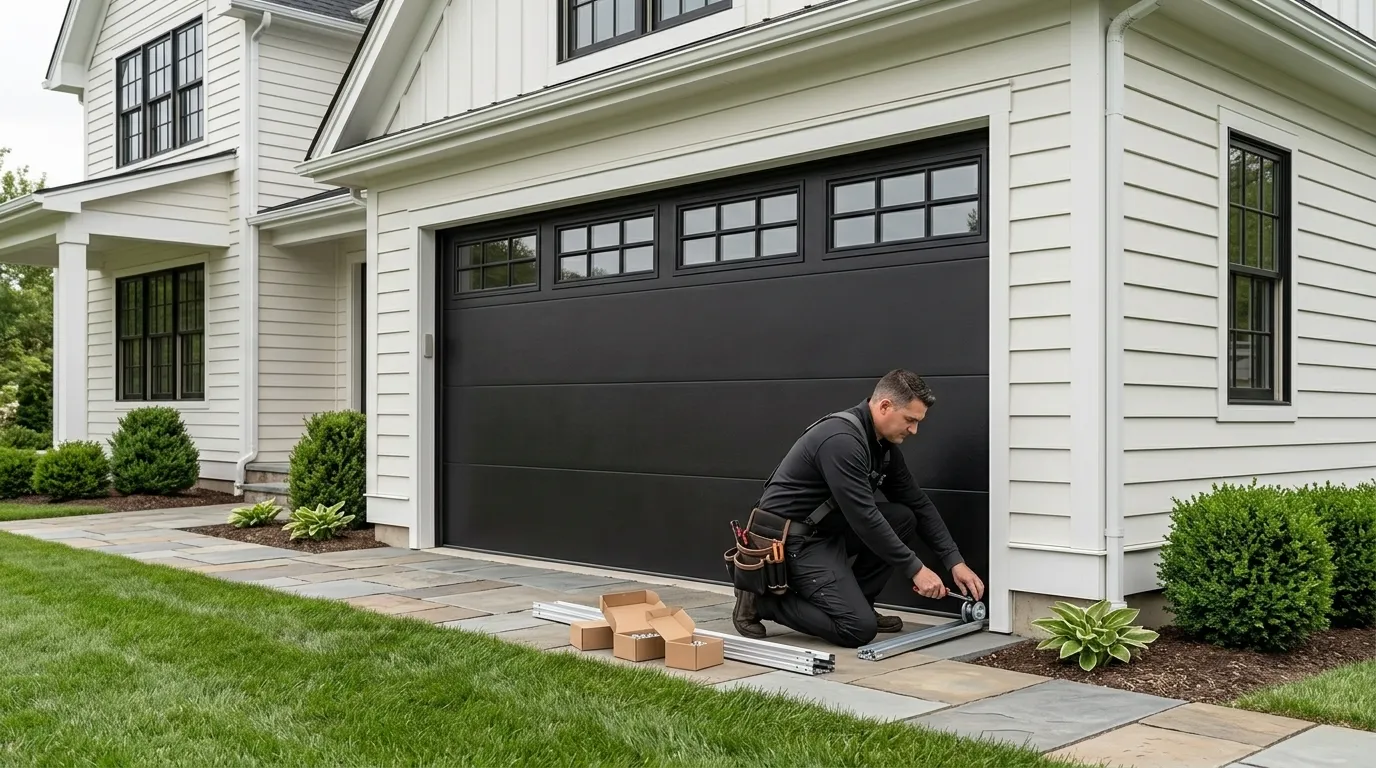
Most of the housing stock in this service area went up between 1956 and 2002, with the median build year landing around 1973 - and across the 41 neighborhoods we work in, from Como Park to Payne-Phalen to Dayton's Bluff, that 1960s-70s wave dominates. Doors from that era were sized to openings that don't match what's on the shelf today, and a lot of them were never insulated because nobody insulated garage doors in 1973. That matters here because this is a cold-severe climate zone, not a mild one. A door built for a mild climate leaks heat around the bottom seal and top panel every winter, and steel that wasn't rated for hard freeze-thaw cycling starts to bow or rust at the hinges faster than it would somewhere warmer. When a homeowner in Frogtown or the West Seventh - Fort Road area calls us about a door that won't seal, warps in cold snaps, or has an opener straining against a track that's a half-inch out of square, it usually traces back to an original 1960s or 70s install that was fine for its decade but isn't built for how this area's winters actually run now. Replacement, not another patch job, is often the right call once the frame and hardware are that old.
A torsion spring garage door install is not a weekend project, and we'll say that plainly even though it costs us calls. The springs on a standard double door hold enough stored energy to break a wrist or worse if the winding bars slip, and getting the track plumb on an opening that's settled over fifty-plus years of Minnesota frost heave takes more than a level and patience. If your home is one of the many in this area built in that 1956-2002 window, chances are decent the framing has shifted slightly from the original square, which means a stock door kit from a big-box store may not hang right without shimming work that isn't in the instructions. Where DIY does make sense: swapping weatherstripping, replacing a bent hinge, or adjusting travel limits on an opener you already have installed correctly. Those are reasonable owner jobs. Full door and track replacement, especially with insulated panels rated for a cold-severe climate, is where we'd rather send a two-person crew than have someone find out the hard way what an unwound torsion spring does to a garage.
The most common mistake we see on older Saint Paul installs is matching a new door to the old track instead of replacing both. Track wears out at roughly the same rate as the door on a house built in the 1960s or 70s, and reusing forty-year-old rollers and hardware on a new panel just moves the failure point a few months down the road. The second place it goes wrong is insulation mismatch - installing a standard door on a home in a cold-severe climate zone without checking that the R-value actually holds up against sustained sub-zero stretches, which this area gets most winters. We also see openers get reused past their reasonable service life because swapping the door felt like enough work for one day. An opener rated for a lighter, older door can strain or fail against a heavier insulated panel, especially on the wider double-door openings common in the 1960s-70s tract-built sections of the service area. None of this is exotic. It's just what happens when a job gets split into pieces instead of done as one coordinated install.
The tell that it's time for a full install rather than another repair call: a door that won't stay level across the opening, panels that have started to separate at the seams, or a track that needs re-adjusting every few months no matter how many times it's been shimmed. Households in this service area report a median income of $91,946, and among the roughly 109,250 owner-occupied houses across the broader 253,852-household area, a fair number are sitting on original garage hardware that's outlived its design life by decades. If your opener is working overtime just to force a door that used to move smoothly, or you're feeling cold air pool at the base of the door even with the weatherstripping replaced, the frame and panel are past the point where parts fix it. That's an installation call, not a repair call, and we'd rather tell you that up front than sell you a third round of adjustments on hardware that's done its job.
If the panels are separating, the door won't sit level even after adjustment, or cold air comes through around a replaced seal, the frame or panel itself is the problem, not a single part. Given how much of the local housing stock dates to the 1960s and 70s, that's a common point to reach, and it usually means installation makes more sense than another repair visit.
Yes. This area sits in a cold-severe climate band, and a door without adequate insulation or a properly sealed bottom track will underperform through a hard winter regardless of how new it looks. We factor that into what we recommend rather than defaulting to whatever's cheapest.
Usually not a good idea if the track is original to a house built decades ago. Worn track and rollers put uneven stress on a new panel and shorten its life. We check the track condition as part of every install rather than assuming it's fine because it still moves.
We don't recommend it. The stored energy in a torsion spring on a standard double door is dangerous to work with unbalanced tools, and older Saint Paul openings often aren't perfectly square anymore, which complicates a DIY kit install beyond what the instructions cover.
Call now or request a free quote - same-day service on most repairs, upfront written pricing.