Saint Paul, MN · Garage Door Service
Garage door spring, opener, and panel repair for Frogtown, one mile northwest of downtown Saint Paul, where most houses date to the 1956-2002 building wave.
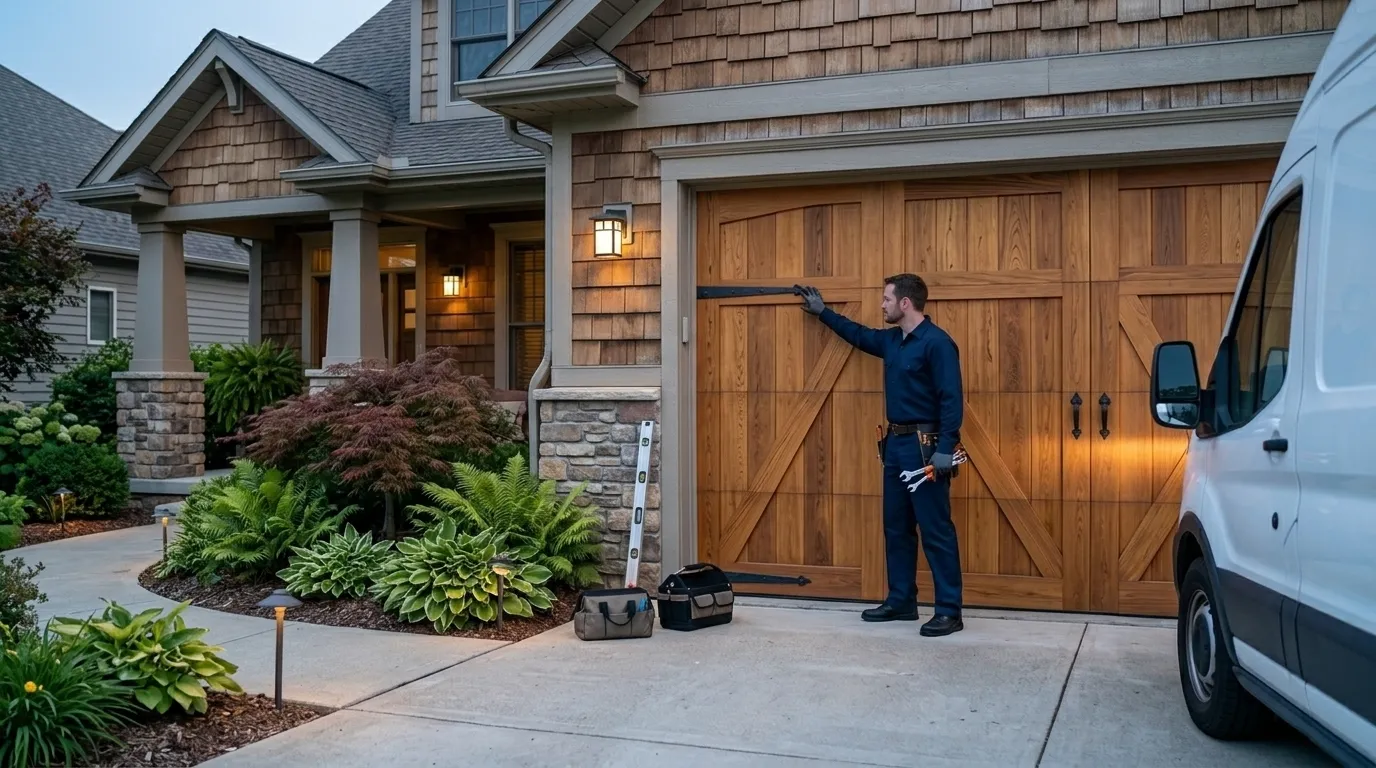
Most of the calls we get from this part of Saint Paul are torsion springs and worn rollers. The houses here went up in the same wave that shaped most of the service area - built between 1956 and 2002, with the median close to 1973 - which means a lot of single-car and narrow two-car openings on hardware that's original or close to it. That era of door came with steel torsion springs rated for a certain number of cycles, and by now most of them have used up that life more than once over.
Openers are the other common job. A chain-drive unit from that period, even if it's been swapped once already, tends to be near the end of its gear life, and the safety reversal sensors on older units often don't meet what's expected now. We replace those rather than patch them.
One honest limit: we don't do custom architectural doors or anything built to order with non-standard dimensions. If your opening doesn't match a stock size, that's a longer lead time and a different kind of job than most of what we handle here, and we'll tell you that up front instead of taking the call and stalling later.
Why does the spring keep breaking? Because torsion springs are rated for a number of open-close cycles, not for years, and a door built in the 1960s or 70s has usually gone through its rated life more than once. Replacing the spring with a correctly matched one, not just whatever's on the truck, fixes it for good - a mismatched spring is why some people think they need a new one every year.
Is it worth fixing an old opener or replacing it? Past a certain point, no. If the gear is stripped or the safety sensors don't work right, the labor to keep patching it costs close to a new unit, and the new one comes with a warranty the old one never had.
Does the cold matter here? Yes. This area sits in a cold, severe climate band, and steel contracts in winter - a spring that's already near the end of its cycle life is more likely to snap on a January morning than in July. That's not a Frogtown-specific quirk, it's what the winters here do to old hardware generally.
Frogtown's houses fall inside the broader pattern for this part of the Twin Cities: built mostly between 1956 and 2002, with the median build year landing around 1973. That's consistent with the mostly 1960s-70s housing stock found across the 41 named areas in the service area, and it shows up in the garage doors - narrower openings, older torsion hardware mounted to the sides rather than a modern center shaft, and openers that have been through at least one replacement cycle by now.
Across the wider service area, there are roughly 253,852 households and about 109,250 owner-occupied houses, with a median household income of $91,946. Frogtown itself is a dense, close-in neighborhood rather than a spread of newer single-family lots, so garage setups here tend to be smaller and older than what you'd find eight or ten miles out where more recent construction has replaced original hardware already.
We don't have a house-by-house count for Frogtown alone, so we're not going to invent one - the build-year pattern above is the honest ceiling on what we can say about the housing stock here specifically.
Frogtown sits about one mile northwest of downtown Saint Paul, in the same close ring as Summit-University and Thomas-Dale, both also roughly a mile out from center. That puts it well inside the distances for surrounding cities like West St. Paul at three miles, Falcon Heights at four, and Mendota Heights, South St. Paul, Little Canada, and Roseville all around five.
Going further out, the gap widens fast - North St. Paul, Newport, and Oakdale sit seven miles from downtown, and by the time you reach Mounds View, Fridley, Robbinsdale, and Dellwood you're twelve miles out. Circle Pines, at the far edge of this list, is fourteen miles from center.
Within Saint Paul proper, Frogtown is closer to downtown than Como Park, which is three miles northwest, or Payne-Phalen, three miles northeast. For a call to this address, that one-mile distance from center is the main geographic fact that separates Frogtown from the suburbs on this list - it's a short trip regardless of which direction the truck comes from.
Yes, that's most of what we see in this part of Saint Paul. The houses here mostly date to the 1956-2002 building wave, median around 1973, so original or first-replacement torsion hardware is common. We match the spring to the door's actual weight and cycle rating rather than guessing.
Depends on what's wrong. Stripped gears or failed safety sensors usually mean replacement makes more sense than repair, especially on a unit that's already outlasted its expected life. A worn capacitor or a bad remote is a smaller fix. We'll tell you which one you're looking at before we start.
Yes. This area sits in a cold, severe climate zone, and steel springs contract and get brittle in low temperatures. A spring near the end of its cycle life is more likely to fail on a cold morning than in summer, which is why winter is when we get the most spring-break calls.
Call now or request a free quote - same-day service on most repairs, upfront written pricing.