Saint Paul, MN · Garage Door Service
Why Saint Paul's 1960s-70s garage openers fail in deep cold and outages, and when to stop wrestling the emergency release and call it in.
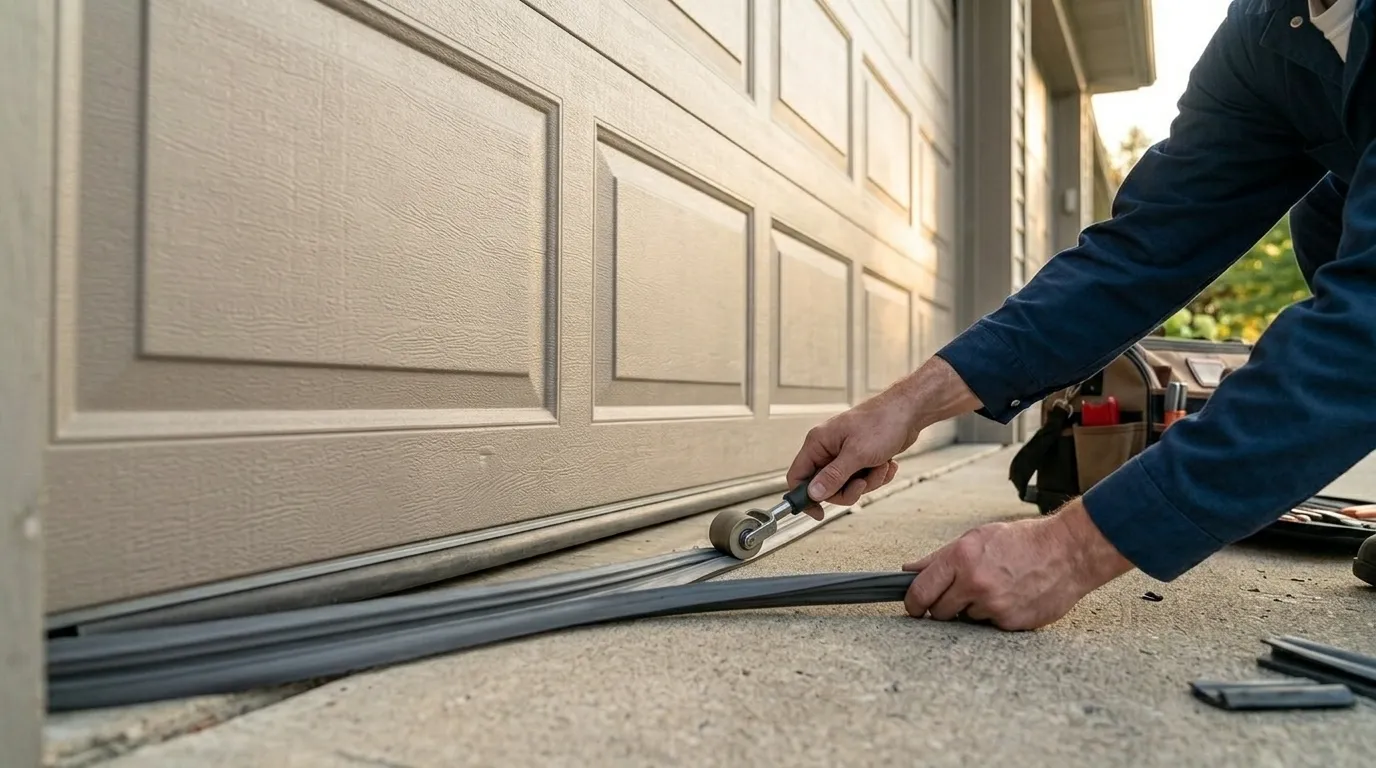
Most garages in this city went up between 1956 and 2002, with the bulk of that stock dating to the 1960s and '70s across neighborhoods from Como Park to Dayton's Bluff. A lot of those openers have been swapped once, maybe twice, since the house was built, and the wiring and outlet behind the unit is often original to the garage, not the opener. If your door won't move and the opener light is dark, the first move is checking the outlet and the breaker, not the motor. Plenty of these garages share a circuit with a chest freezer or a block heater, and it's the freezer that trips, not the opener. If the light comes on but the carriage doesn't move, that's usually the trolley or the drive gear, and it's fine to leave that alone until you can look at it in daylight. What you shouldn't leave alone is a door that's stuck half-open in a cold snap - the opener will keep trying and can burn out a capacitor or strip a plastic gear trying to force a door that's frozen to the weatherstrip at the bottom.
Every opener has a manual release cord for exactly this situation - pull it, and you disconnect the trolley so you can lift the door by hand during a power cut. That part is simple. Where it stops being simple is torsion spring work behind the opener, which you should not touch, ever, regardless of how confident the YouTube video looked. In houses built in the 1960s and '70s the spring is often original hardware paired with a newer opener bolted on top of it, which means the spring is decades past its rated cycle count even if the opener looks new. If the manual release won't budge, or the door is heavy enough that lifting it by hand feels dangerous, that's spring tension, not opener trouble, and it needs a call, not a wrench. We don't carry every discontinued drive-gear kit for every opener model installed in this era of housing stock, so on some jobs the honest answer is replacement rather than a repair part that's back-ordered for weeks.
This is a severe cold climate, and that changes what actually fails first. Opener logic boards and capacitors don't love repeated deep-cold starts, and a door that sat overnight at well below freezing asks more of the motor than one that sat in a heated garage. Grease on tracks and rollers stiffens in that cold, so the opener senses more resistance than it should and either strains or trips its own force sensor and reverses. That force-sensing behavior is normal and it's the opener protecting the gears - it is not a sign the unit is broken, and resetting the travel limits often fixes it without a truck roll. Power cuts in winter storms are the other half of it: a door that loses power mid-cycle needs that manual release pulled before anyone tries to force it by hand from outside, especially if ice has built up in the track since the last cycle. None of this is exotic weather behavior - it's what cold does to grease, plastic gears, and boards, every winter, on the same schedule.
The actual problem on most of these calls isn't the power cut itself - it's a decades-old opener meeting a cold night at the same time. The outage exposes a unit that was already tired: a capacitor near the end of its life, a drive gear worn thin from years of a heavier-than-spec door, or limit settings that were never adjusted for the current spring tension. In a house built when the neighborhood's median goes back to 1973, that opener has likely outlived at least one prior spring set already, so an outage is just the moment it finally shows. We can reset logic, swap a gear kit, or replace a capacitor on-site for a lot of these calls. What we can't do is guarantee parts for every opener model still running from that era - some of the plastic housings and gear kits are no longer made, and at that point replacing the unit outright is the more honest recommendation than chasing a part that isn't coming.
Cold stiffens the grease on your tracks and rollers, so the motor meets more resistance than usual. The opener's force sensor reads that resistance and reverses or stalls to protect its gears. It's normal behavior in a severe cold climate like this one, not a sign of failure, though it's worth having the travel limits checked if it happens often.
Pull the manual release cord hanging from the trolley - this disconnects the door from the opener so you can move it by hand. Do this before trying to force the door from outside, especially if ice has formed in the track since the last time it cycled.
Yes. A lot of houses in this age range got a newer opener bolted onto original torsion hardware. The opener being new doesn't mean the spring is. If the manual release won't move freely or the door feels heavy by hand, that's spring tension, and it needs a call rather than DIY work.
Not always. Some drive-gear kits and housings for openers from this era are discontinued, and we won't promise a part that's on indefinite back-order. On those jobs replacing the unit is usually the more honest and faster fix than waiting on a part that isn't coming.
Call now or request a free quote - same-day service on most repairs, upfront written pricing.