Saint Paul, MN · Garage Door Service
Garage door repair for Saint Paul homes built mostly between 1956 and 2002, where cold-climate hardware fatigue and original openers are the common failure points.
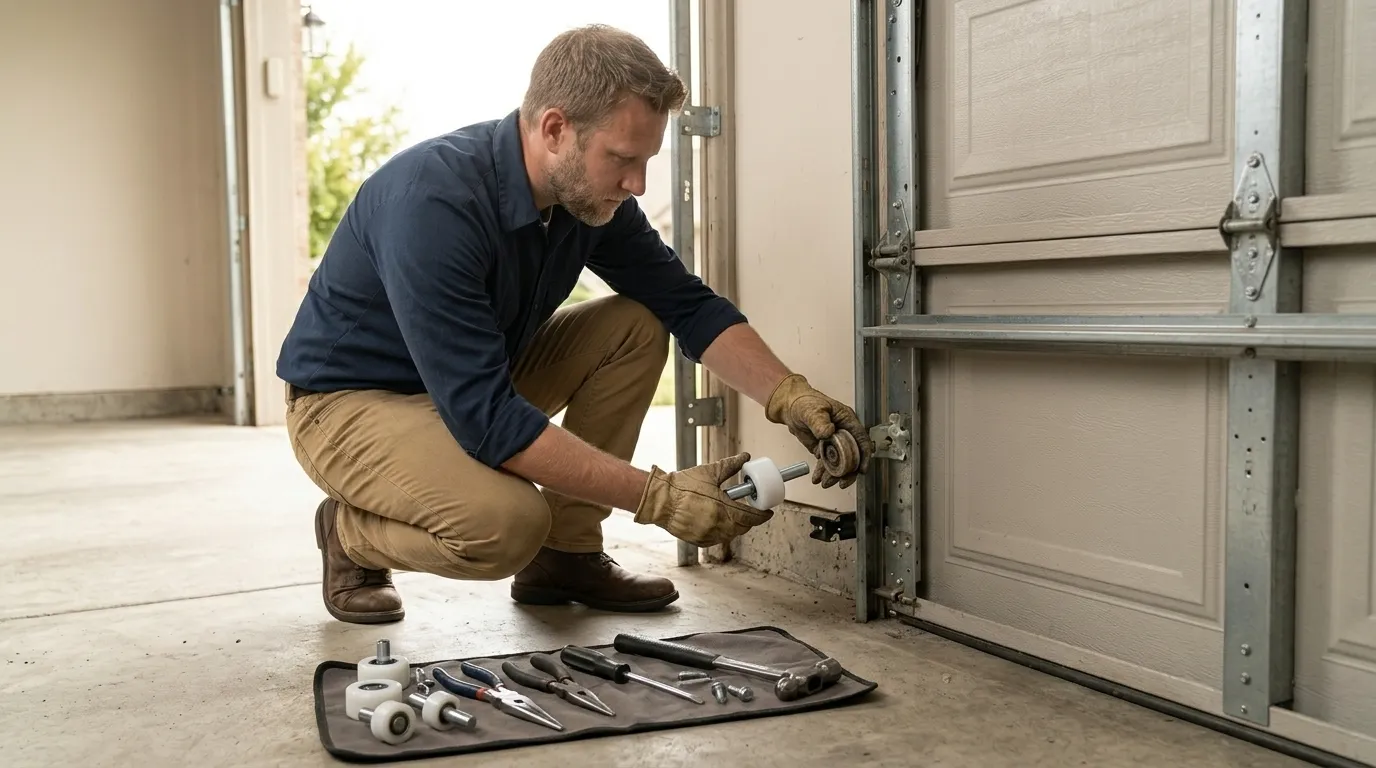
Most of the houses we get called to in Saint Paul went up somewhere between 1956 and 2002, with a lot of the stock clustered in that 1960s-70s wave across the city's named areas, from Frogtown and Thomas-Dale up near downtown out to North End and Como Park. A door and opener installed when a house was built in 1968 is not the door and opener you want running today, but plenty of them are still the original hardware, just aged. Add in a severe cold climate band, and steel torsion springs that have been cycling through decades of freeze and thaw start losing tension unevenly. One coil goes soft before the other, the door starts riding crooked in the tracks, and the opener strains to compensate. That combination - old hardware plus real cold - is the specific reason spring and cable failures cluster here more than in a mild-climate market. It's not that Saint Paul doors are built worse. It's that a lot of them have been doing this job since before anyone reading this owned the house.
There's a fair amount you can safely check yourself before calling anyone. Look at the tracks for dents or gaps where the rollers ride, check that the bottom seal isn't torn or frozen stiff to the slab, and listen for the door - a slow grinding hum on lift usually means a roller or bearing, not a spring. If the door won't budge and the springs look stretched or one coil sits visibly wider than the other, stop there. Torsion springs are wound under several hundred pounds of tension and they're not a weekend project; we won't walk you through releasing one over the phone, and no reputable company will. What you can do yourself: tighten loose hardware, lubricate hinges and rollers with the right garage door lubricant (not WD-40, which washes out fast in cold weather), and clear ice or debris from the track before it forces the opener to overwork itself. That's the honest limit of the DIY side of this job.
The failure that catches homeowners off guard isn't usually the spring itself - it's what the spring was doing to everything around it before it finally gave out. A weak spring means the opener carries more of the door's weight than it's rated for, and in houses built in that 1956-2002 window, the opener is often not original, but it's frequently a mismatched replacement installed without resetting travel limits or force settings for the actual door weight. That mismatch burns out drive gears and strips nylon sprockets faster than the spring problem that caused it. We also see this go wrong when a homeowner replaces one spring on a double door and leaves the other original - two springs of different ages under the same load age unevenly and one fails again within a year. If your panels are original to a house from that median 1973 era, replacing a single section rarely matches the finish or the panel profile anymore, and that's worth knowing before you commit to a partial fix.
The most common call we get across Saint Paul is a door that starts to open, gets partway, and either reverses on its own or stalls with a heavy grinding sound. In a severe cold climate, that symptom spikes hard in winter months because contracting metal tightens tolerances that were already worn loose. If the opener light blinks a fixed number of times when this happens, that's usually the unit itself telling you which sensor or limit it's tripping on - worth noting down before you call, since it saves diagnostic time. A door that reverses under load almost always means the springs are no longer carrying their share of the weight and the opener is fighting a fight it isn't built to win, which is the pattern we see most in houses running original torsion hardware.
Steel torsion springs and metal track components contract in the cold, tightening tolerances that were already loose from age. In a severe cold climate like Saint Paul's, that shift is enough to turn a marginal spring or misaligned track into a door that stalls or reverses mid-cycle, especially overnight when temperatures drop furthest.
If your house dates to the 1960s-70s wave common across Saint Paul, the opener has likely been replaced at least once, but not always correctly matched to the door's actual weight. A mismatched opener wears out gears fast and is a common reason doors that seem fine suddenly stop working.
On a double door, replacing only the failed spring leaves two springs of different ages under identical load. The older one typically fails within the following year. We generally recommend replacing both at the same time to avoid a second service call.
No. General household lubricants like WD-40 wash out quickly in cold weather and leave hardware drier than before. A garage door-specific lubricant holds up better through Saint Paul's winter temperature swings.
Call now or request a free quote - same-day service on most repairs, upfront written pricing.