Saint Paul, MN · Garage Door Service
Garage door repair and spring service for North of Maryland, Saint Paul, built mostly in the 1960s-70s era with original hardware still common on many homes.
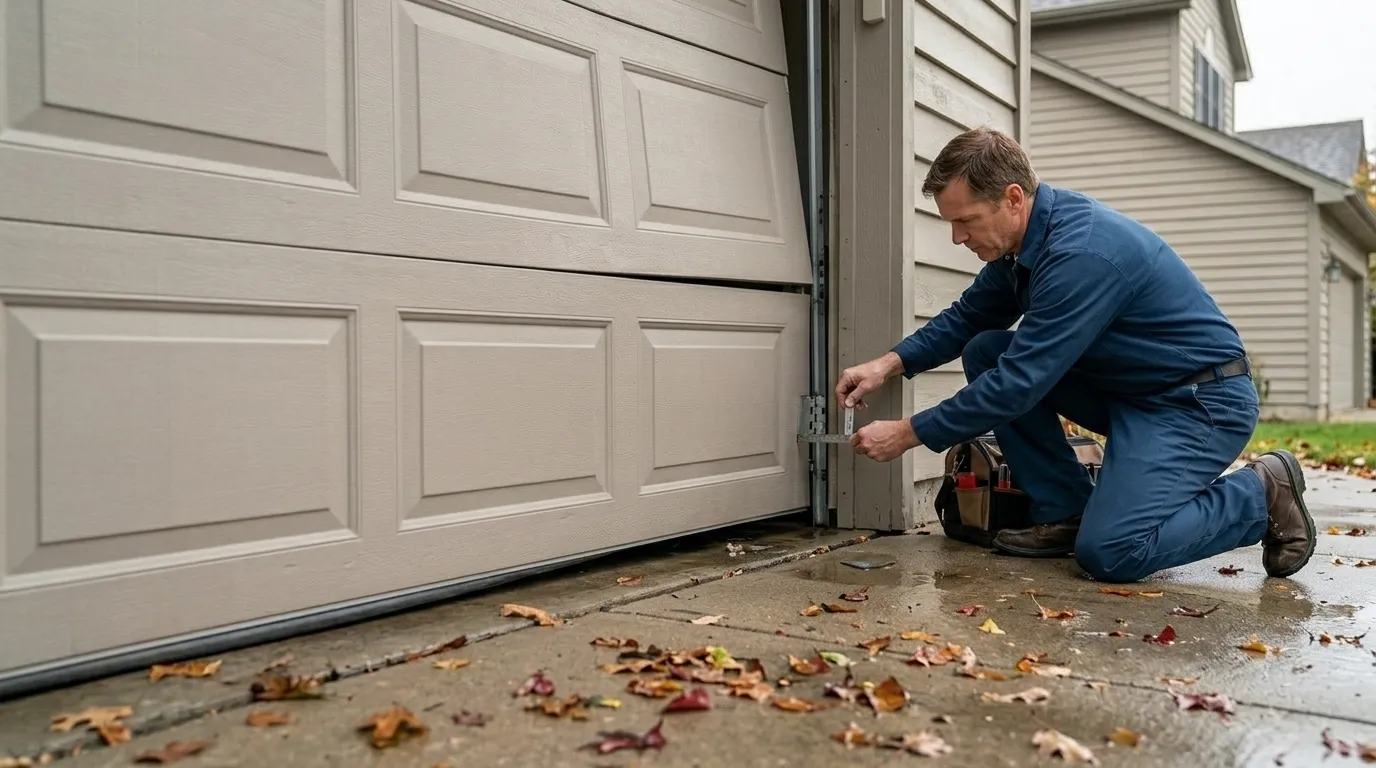
Houses in this pocket of Saint Paul, sitting about two miles north of downtown, mostly went up in the same wave of construction that shaped the wider service area: 1956 to 2002, with the median build year landing around 1973. That means a lot of garages here still carry the torsion springs, steel track, and openers that came with the house or were swapped in during the first round of upgrades in the 80s or 90s. The calls we get from this area lean toward broken torsion springs on single and double doors, worn rollers that have gone from steel to loud, and openers old enough that the logic board or the drive gear has finally quit. We also see cable fraying on the older wind-style setups that were standard in that build era. What we don't see much of here is anything exotic - custom carriage doors or oversized commercial units aren't typical on these lots, so parts availability usually isn't the problem. The problem is usually just age catching up with hardware that was solid when it went in.
If your door came with the house and the house dates to the 1960s or 70s, the spring has likely been replaced at least once already, sometimes more. A spring that's original to a 1973-built garage is not a spring you want to keep testing. If the opener still uses a chain and a wall button with no keypad, that's consistent with the era and not a sign anything is wrong - it just means parts for a repair may need to be sourced rather than pulled off a shelf, since some of those older drive units aren't made anymore. One honest limitation: if your opener is a discontinued model from that period, we may recommend replacing the unit rather than chasing a part that's back-ordered for weeks. That's not upselling, it's math - a new opener often costs less than a long wait plus a used part of unknown condition.
This part of Saint Paul sits inside a service area where housing runs 1956 to 2002 overall, with the bulk of stock from the 1960s and 70s across the 41 named areas we work in. That build pattern shows up directly in the garages: single-car attached garages with steel sectional doors on torsion hardware, sized for the cars of that period rather than today's trucks and SUVs. The area also sits in a cold-severe climate band, which matters for garage doors specifically - insulation quality, weatherstripping condition, and how well a door seals against a slab that's had fifty-plus winters to heave and settle. Homes here belong to a service area with 109,250 owner-occupied houses and a median household income of $91,946, which tends to mean owners maintaining a house long-term rather than flipping it, and garages that get fixed rather than gutted and redone.
North of Maryland sits about two miles north of downtown Saint Paul, one of the tighter-in neighborhoods in a service area that stretches out to towns ten and twelve miles off like Roseville, Little Canada, and Vadnais Heights. Being this close in means older housing stock and narrower lots, which can mean tighter garage clearances than what you'd find further out. We don't have a landmark list for these streets to point to, and we're not going to invent one - what we can tell you is the housing era and what it means for the door on your garage, and that's the part that actually matters when something breaks.
Most houses in this part of Saint Paul were built between the 1960s and 70s, with the wider area's construction running 1956 to 2002. A door and opener from that period is often original or a first-generation replacement, which usually means it's due for spring or opener service.
For common torsion spring and track hardware from that era, yes. Some discontinued opener drive units are harder to source, and in those cases replacing the opener is often faster and cheaper than waiting on a back-ordered part.
This area sits in a cold-severe climate band, and older weatherstripping and insulation don't hold up the way they did when new. A door that binds or won't seal in winter is often a hardware or seal issue tied to age, not a sign you need a whole new door.
Call now or request a free quote - same-day service on most repairs, upfront written pricing.