Saint Paul, MN · Garage Door Service
Falcon Heights homes mostly date to 1960, earlier than the area median of 1973. Saint Paul Garage Door Pros travels the 4 miles to fix the hardware that era actually used.
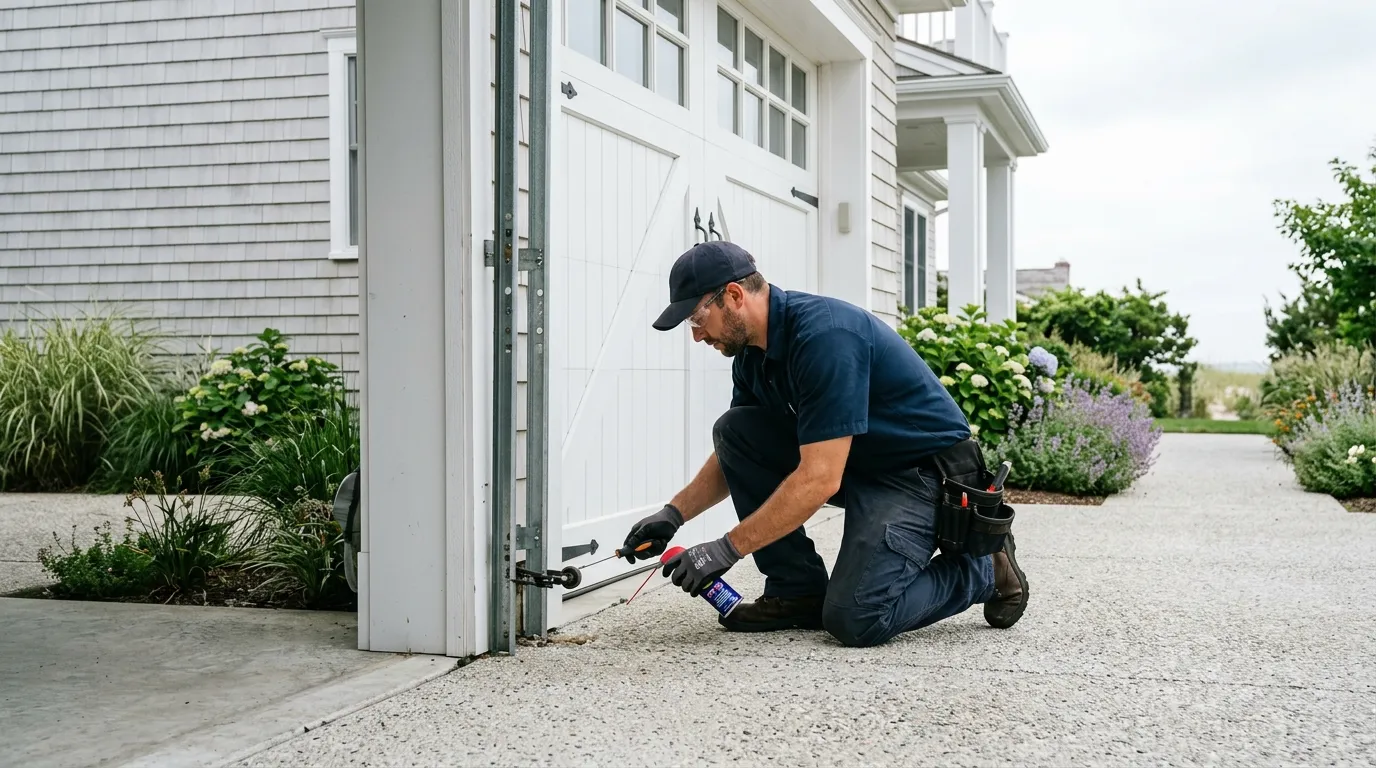
We run out of Saint Paul, about 4 miles from Falcon Heights, so there's no depot sitting on a Falcon Heights street and we won't pretend there is. What that distance means in practice is a short drive, not a different truck or a different crew than anyone else we serve closer in. Falcon Heights sits among a ring of first-ring suburbs - West St. Paul, Roseville, and Little Canada are all within a few miles the other direction - and the roads in are the same ones we use every day. We don't advertise a same-day guarantee here or anywhere, because that's not a number we have. What we can tell you is that the trip itself isn't the bottleneck; matching the right spring or opener to a house built in 1960 usually is, and that's the part worth planning around.
Falcon Heights' housing skews older than the service area as a whole. Across the broader area the median build year is 1973, with most stock dating from the 1960s and 70s, but Falcon Heights itself centers on 1960 - a full 13 years ahead of that median. With roughly 2,041 households and a median income of $93,233, this is a smaller, more established pocket than a lot of the newer-growth areas on the list, and it reads that way from the street: original garages, original openers in more houses than you'd expect, and additions that came later without matching the original bay. A 1960 build date isn't a red flag on its own, it just means the garage door was designed and installed under a different set of assumptions than a 1985 or 2000 build would be.
A garage built around 1960 was very likely fitted with a single-panel, one-piece door on side-mounted hardware rather than the sectional, torsion-spring setup that became standard later. If that's still what's on the house, the fault pattern is different: the failure point is usually the pivot hardware or the extension springs along the track sides, not a center torsion spring over the header. Parts for that hardware are not something every supplier stocks, which is the honest limitation here - we can source and fit them, but it sometimes takes longer than swapping a torsion spring on a newer door, and on some jobs replacing the whole unit with a modern sectional door is the more practical call than chasing parts for the original. Add in the climate: this area sits in a cold, severe winter band, and steel hardware from that era has usually seen sixty-plus winters of expansion and contraction. If the house has since been retrofit with a newer opener bolted to old track, that mismatch is itself a common source of the binding and reversing complaints we hear about.
Falcon Heights doesn't sprawl the way some of the farther-out spots on our coverage list do - Circle Pines or Lake Elmo, ten-plus miles out, have room to keep building new. Here, most of what you're going to get is what's already standing, filled in over time rather than expanded outward. That matters for garage doors because a neighborhood built out once, around 1960, and left mostly alone doesn't get a fresh batch of standardized modern doors the way a subdivision built in 2005 would. You'll find a mix: the original door still on some houses, a mid-2000s sectional replacement on the next one, and everything in between. There's no single fix that applies to every driveway in Falcon Heights, and we don't try to sell one. What we do is look at what's actually mounted on the header before we quote anything.
It's possible, especially if no one's mentioned a replacement. A lot of Falcon Heights houses from that era still have the original side-mounted hardware. If you're not sure, tell us what the springs look like - stretched along the horizontal track versus a single coiled spring above the door - and that alone tells us which era we're dealing with.
No. We're based in Saint Paul, about 4 miles away, and travel out for jobs. There's no local depot here, just a short drive from where we're set up.
Doors from around 1960 often used one-piece panels on side hardware, which isn't the sectional torsion setup most suppliers stock heavily today. We can usually source it, but it can take longer than a same-day torsion spring swap on a newer door, and sometimes replacement makes more sense than waiting on parts.
The area sits in a cold, severe winter climate band, and steel hardware that's been through decades of freeze-thaw cycles is more prone to stiffness and metal fatigue than newer galvanized parts. It doesn't mean the door is due to fail, just that inspections matter more on hardware that old.
Call now or request a free quote - same-day service on most repairs, upfront written pricing.