Saint Paul, MN · Garage Door Service
Most Bayport homes date to 1960, older than much of the metro stock. Saint Paul Garage Door Pros drives out to fix springs, openers, and original hardware.
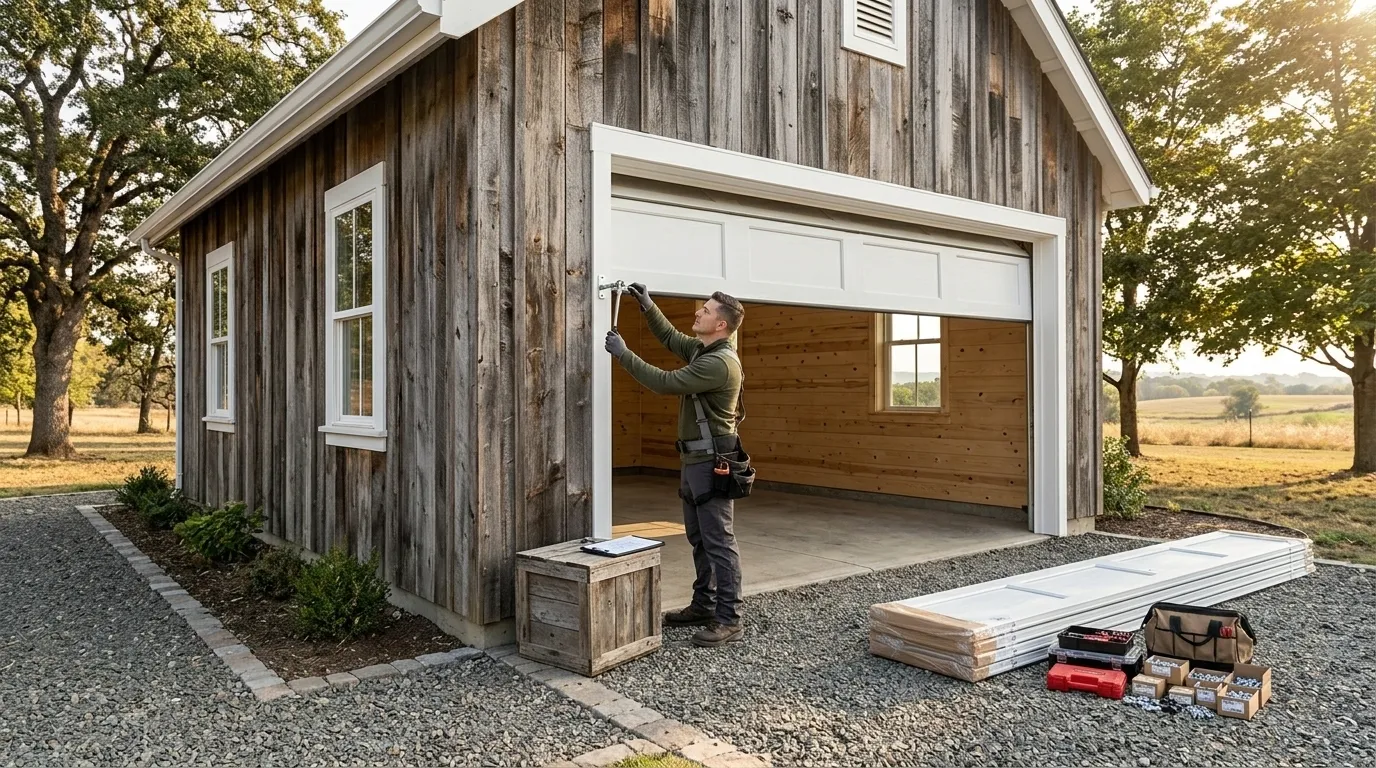
Bayport sits about 16 miles from our shop in Saint Paul, so we don't keep a truck parked in town waiting for calls. What that means for you is straightforward: we schedule the trip, load the parts we expect to need based on what you tell us about the door, and drive out. It's not a same-block response like a job three streets from our door, and we won't pretend otherwise. If a spring lets go on a Tuesday morning, plan the visit around drive time, not around the idea that someone is already around the corner. Across the wider service area we cover dozens of communities at varying distances, and Bayport is on the farther edge of that map. We still take the call. We just ask that you give us the make and rough age of your door up front, because that's what lets us bring the right torsion bar, the right cable length, or the right opener logic board on the first trip instead of a second one a week later. A 16-mile round trip for a part we didn't need to grab twice is time nobody wants to pay for.
Bayport's housing runs older than a lot of what we see closer to Saint Paul. The median year built here lands around 1960, while the broader service area's housing stock stretches from 1956 up through 2002 with a median closer to 1973. That gap of over a decade matters more than it sounds like on paper. A neighborhood built in the early 1960s got its garage doors and openers on a completely different hardware standard than one built in the 1980s or 1990s, and Bayport, with roughly 1,213 households, sits solidly in that older bracket. Household income here runs higher than the service-area median of $91,946, at about $115,781, which we mention because it tends to show up in how doors get maintained and replaced rather than just patched. We see more owners in areas like this choosing full replacement over another repair once a door hits a certain age, simply because they can. That's not true everywhere we go, and we don't assume it walking in, but it does shift the kind of conversation we have on a Bayport driveway compared to a newer subdivision twenty minutes away.
A garage built around 1960 was very likely fitted with a door on extension springs mounted along the horizontal tracks, not the torsion spring above the opening that's been standard for decades now. If that original setup is still in place, or was replaced once with a like-for-like unit sometime in the following decades, the parts and the failure points are different from what you'd find on a door installed in the last fifteen years. Extension spring systems wear at the pulleys and the safety cables as much as at the springs themselves, and those aren't always stocked the same way torsion hardware is. Layer in the region's cold, severe winter climate, and steel components that have been cycling through decades of freeze and thaw are more likely to show fatigue at welds and hinges than a newer door would. We won't tell you every door from 1960 needs replacing; plenty of them have been updated piece by piece and run fine. But if your door has never had the springs or cables touched, that's the honest place to start looking before winter, not after a cable snaps on a cold morning.
Not every house in Bayport dates to the same decade, even with a median build year around 1960. Older sections carry the original garage stock we described above, while infill and later construction nearby brought in doors built to more recent code and insulation standards. That mix means we can't assume a door type from the address alone, and we don't try to. What we ask instead is simple: how old is the door, has it been replaced since the house was built, and does the opener look original or newer. Those three answers tell us more than the decade the street itself went in. One honest limit here: if your door and opener are both original to a 1960s build and a part has genuinely failed beyond patching, we're going to tell you that replacement is the better spend rather than keep swapping parts on hardware that's earned its retirement. That's not a sales pitch, it's the same math we'd want someone to walk us through in our own garage.
No. We work out of Saint Paul and drive to Bayport for calls, about a 16-mile trip each way. We don't advertise a local depot or a guaranteed response window here because we don't want to promise something we can't back up from that distance.
Not automatically, but it's worth checking. Doors from that era often ran on extension springs and hardware that differs from what's standard today. If yours has never had springs or cables serviced, that's the first thing we'd look at, especially heading into cold weather.
Generally yes. Steel components that have already cycled through many winters show fatigue sooner than newer hardware rated for the same severe cold. It's not guaranteed, but an original 1960s-era door and opener are more likely to need attention before a newer install.
Not always. Plenty of older doors have had panels, springs, or openers updated over the years and run fine. We only recommend full replacement when the original hardware has genuinely failed and repair parts don't make sense anymore.
Call now or request a free quote - same-day service on most repairs, upfront written pricing.